
All In with Erin O. White
Helen Maher
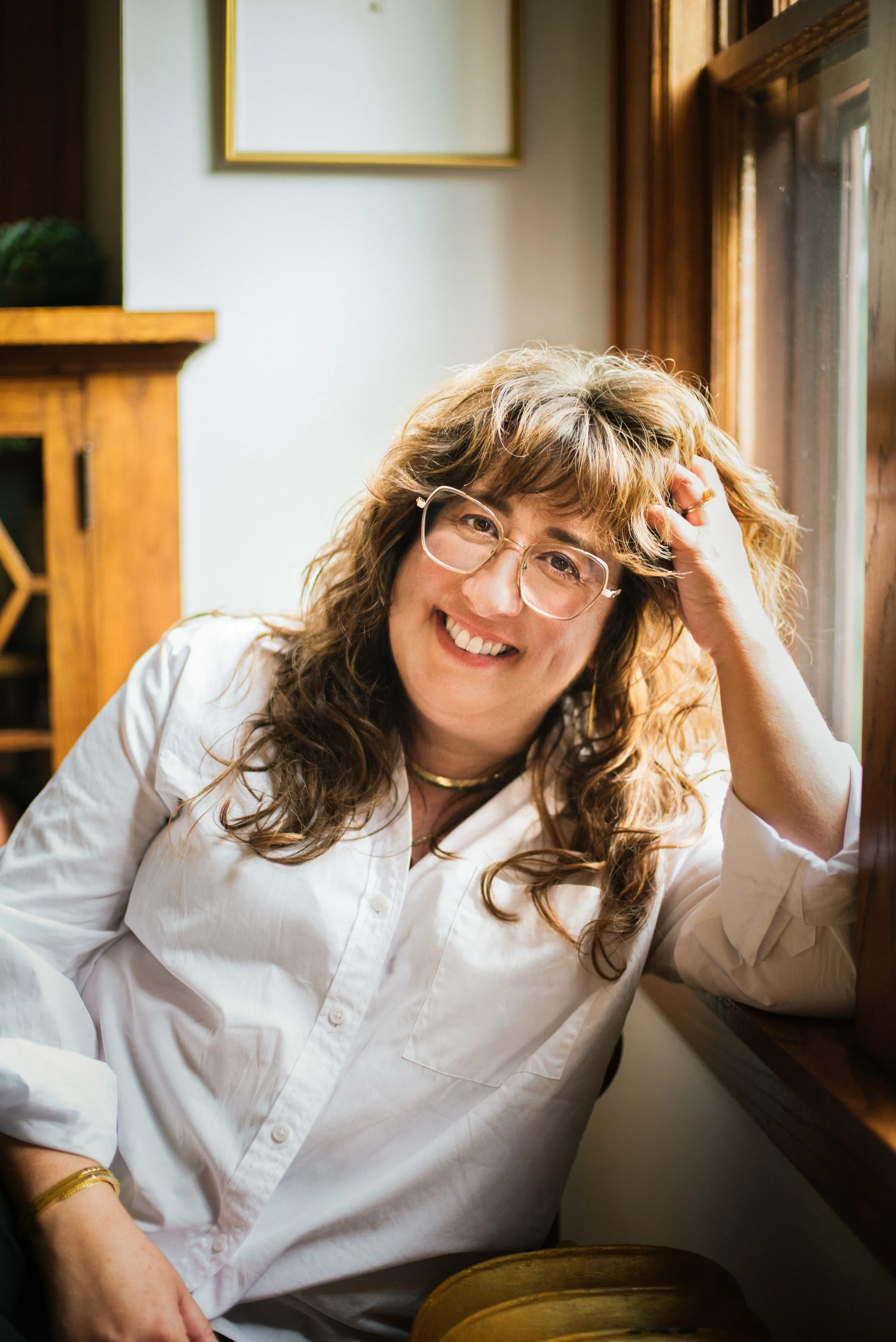
ERIN O. WHITE
is a fifty-two year old debut novelist. She is also the author of the memoir, Given Up For You, and essays that have appeared in the New York Times, The Kenyon Review, and elsewhere. She lives in Minneapolis with her wife and two daughters.
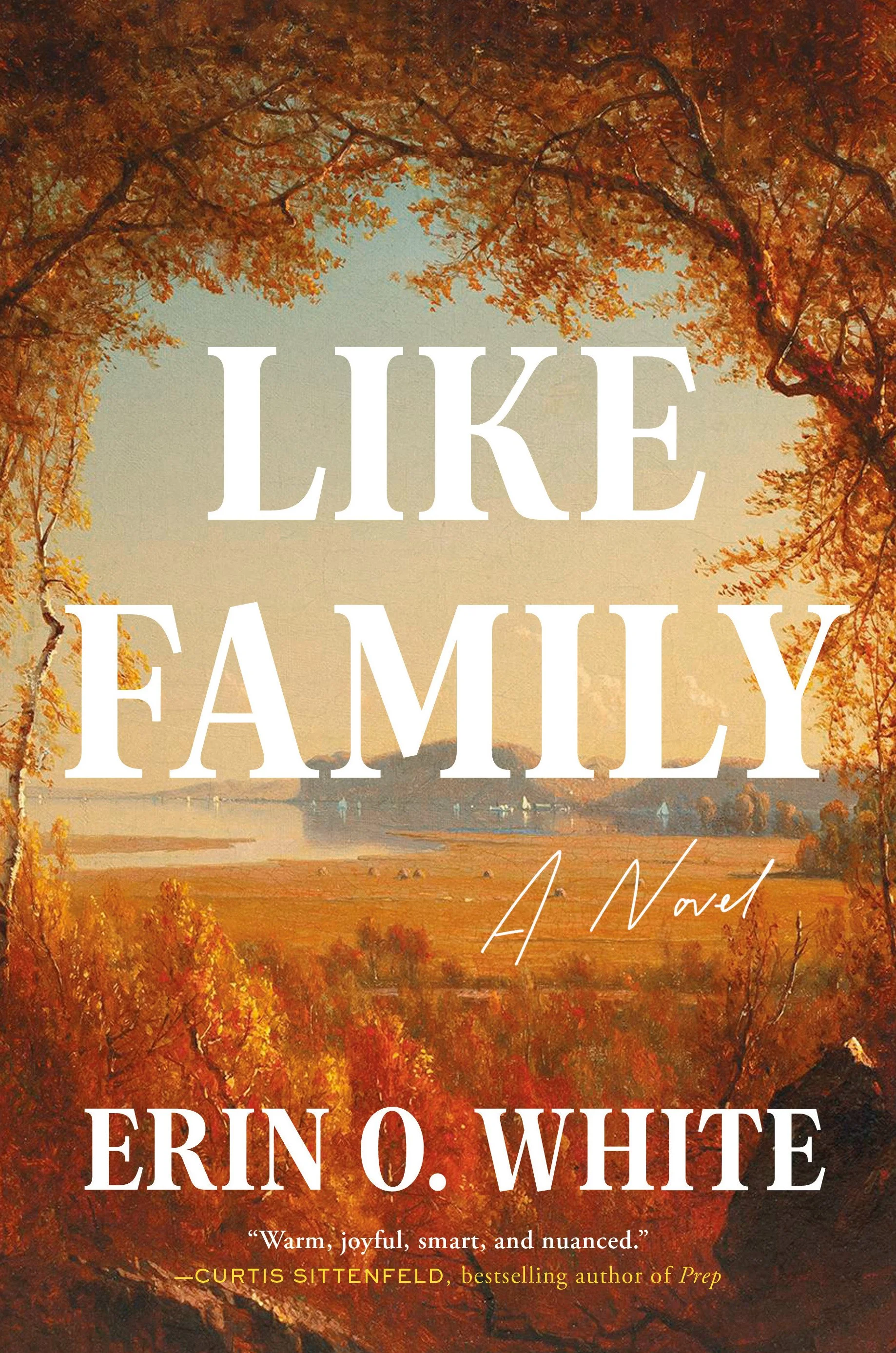
Interview with Erin O. White
“It was too much to ask. But sometimes too much is what we ask of the people we love most.”
Radclyffe, New York, is an idyllic upstate town, nestled in the hills and complete with artisanal bakeries, pottery studios, and hidden swimming holes. Ruth and her wife, Wyn, are living the dream (or Wyn’s dream, at least) with their four children on their small farm, which is also the bucolic gathering place for their circle of friends. It’s a sweet life, but there’s a secret at its center, one that not even Ruth’s best friend, Caroline, knows.
What Caroline does know is that she loves and depends on Ruth, and on the bond between their families. More than anything, she wants her tender-hearted son not to grow up lonely the way she did. Unfortunately, no one can assure her of that, especially not her husband. He just wants things to be easy, drama-free—which is impossible, as he has donated his sperm to his cousin Tobi and her wife so that they could have kids of their own. Now those children are asking unanswerable questions.
After an unexpected death in their community, all three couples are forced to confront the tensions that have long been buried beneath the surfaces of their lives. Richly textured and big-hearted, this exhilarating debut is an unforgettable story of the alchemy of love and loyalty that makes friends Like Family.
Interview with Erin O. White
HM: Can you explain Like Family for me?
EW: Okay, I’ll just give a real quick review of my book. The book’s called Like Family. It takes place in a fictional upstate New York town called Radcliffe, and it’s really a coming of middle-age novel. So you know, a coming of age novel is about people who are becoming teenagers. My book is about people becoming adults in middle age and how you can find yourself with everything you’ve ever wanted, like your kids and your wife or husband and your jobs and your friends. And then all of a sudden, you realize, wait a second, I want other things too. I want new things. But those things are a lot more chaotic and a lot harder to understand. The book’s about what happens when you want these new things in midlife. All of the desires in my interconnected characters are set in motion when a person in their town who’s pretty much a stranger to all of them dies.
HM: Can you explain your writing process?
EW: My writing process. Okay, tell me what you mean by that. Like on a daily basis or how I begin a project?
HM: Let’s start with how you begin a project and then we can zoom in from there.
EW: Okay, so I think for every project, the process is a little bit different. I’ll just talk about the process for writing this book. In this case, I started with an idea and I kept something that I sort of think of as like a process journal. So I do two things. Some people start by writing scenes. I start by just sort of taking character sketch notes. For me, a story oftentimes forms with two things: one is characters and the other is setting. I think a lot about who my characters are and how they know each other, and then I think about the place where they live. In this particular case, these two things came together before my understanding of what the plot was going to be. I knew that what I wanted to do was tell a story of interconnected people in early middle age, and so I created some family constellations. So I was like, I think I can sort of see these three main characters, and then I started to write details about their lives and wrote a whole bunch of backstory and little bits of details until I felt like they were emerging to me as half-formed people. At that point, I knew they were going to be in upstate New York, so I created a fictional small town. I made a tiny map of the town for myself, just where I could start to put some of the first places that I was going to put people. I knew that I wanted to open with a dinner party because I felt like a dinner party is a scene where you can introduce a lot of different characters at once, and so I started working on that scene. That’s no longer the first scene of the book. But the funny thing is, I wrote a-first-thing that was a dinner party, then I wrote a-first-scene that was a funeral, and then I wrote the final-first-scene, which was actually two of my characters alone together on a beach. So I went from something really big down to something really small, but I couldn’t do that until I had a sense of the sort of scale and size of the book. One of the things I feel like is part of my process in the beginning is making sure that I give myself enough wide open space to populate the book with a lot of different ideas and a lot of different people, which is why I couldn’t have started with the two people on the beach. That would have made the book in my mind as it was beginning too small. Does that make sense?
HM: Yeah it does.
EW: Yeah, so, that gets to the point that my process and all writers’ process mostly is just tons and tons of revision. And not revision in the way of like, “oh I’m going over this one page and I’m checking for spelling,” revision like, “I’m throwing out that whole scene and I'm throwing out five of those characters”. You’re really just moving people around and you can’t be super attached to who they are to each other just because you got to make this. Once the plot comes into play, you’ve really got to be open to anything.
HM: I love that. Let’s get into the more granular writing process. Like, what do you do? What’s your day-to-day?
EW: That’s an interesting question. My day-to-day really varies. Once I’m in the project and it’s really happening, I do write every day. I use a wordcount for myself. Some people are like, “I’ll always write two pages,” or “every time I sit down I’ll write a scene.” But for me, what’s really worked is a wordcount log. I just commit to being at my desk at a certain time every morning, depending on whatever’s happening with my family, and then depending on where I am in the book, I make a certain number of words every day. In the beginning of the project, when I’m really just trying to figure stuff out and I don’t really know where it’s going, I might write 250 words for a few months. And then I bump that up to 500 words a day. And I stay at 500 words for a pretty long time. Once the project really has legs, and maybe I have a draft of whatnot, I work up to writing about 750 or 1000 words a day. I keep that pace up for a little while and then I drop back down again. For me, I just have a number and I hit it every day just because that’s the way my brain works. That helps me stay at the desk and get stuff down as opposed to being like, “oh I can’t work that long today, so I’m not going to,” but if I just have to write 250 words, sometimes I can do that in 45 minutes.
HM: How long did it take you to write Like Family? And I’ll go like, we can say from the idea stage to editing.
EW: Like Family took me about two years, maybe two and a half, which is for me, pretty fast. I had written a book before that, which was actually a long, larger endeavor that took me about five years and I put it away in a drawer thinking I would get back to the ending of it. And I started writing Like Family as just like a fun project. My other book fell to the wayside and this book really got legs. And this one was just fast. It was fast. I think I knew what I wanted to say. It was fun to work on, and I think it kept my attention.
HM: How do you keep that motivation, especially when you’re in the revising process or the editing process, where it’s like, you’re throwing out all this stuff that you love or you’re getting this feedback from an editor and it’s like, “wow, you should not do this part”.
EW: I think that in order to be a writer who can do it as a job successfully, you have to like that work more than anything, or at least as much as everything else. There’s this expression that’s like, revision is cleaning up after the party, but I think that most writers would say that actually revision has to be your party. You have to really love going in and mixing stuff up and changing stuff. And you also have to not be that attached. This is just totally my opinion. You have to have a balance between being attached to your vision, obviously, and what you want to do, but you have to be open to the idea that your book can take a whole bunch of different directions and that the goal for a writer is always to have an editor. Our goal is to be read, and you can’t really do that unless you have an editor who’s working on your book with you. And you have to understand that when you get an editor, you hope for one you can really trust and love, who really understands what your vision is, but you also are open to the idea that there are so many different ways to do things. So like, for example, I loved working with my editor so much. She would push me sometimes, but I would really feel comfortable with what her suggestions were. We came to the point where it was really time to finish up the book, and I sent it back to my agent and my agent did a readthrough and she was like, “There’s just this one thing I think should change.” There’s this scene where the main character, whose name is Ruth, gets a phone call from someone in her past, and my agent was like, “I think Ruth needs to make the phone call. I think it’s better for the action. I think it’s better for the motivation, the drama, all these things.” And I was like, “Oh, no, I don’t agree. I don’t think so, I don’t think you’re right. I don’t want to change it. She was like, “just sit on it for a while.” So I sat on it and I talked to a couple of friends and my friend who’s a writer was like, “Why don’t you just try writing it that way and see what you think?” And so I tried; I wrote it that way and I was like, “Oh my God, she’s right. She’s so right. That’s how it should be.” And I changed it. It was really such an important lesson. You’re not the expert and there are a lot of different ways things can go. If you have people around you who you really trust, it’s really good to develop these relationships where you can be open to making changes. Because, again, the whole goal is to get the work out there. It’s not to create something that’s perfect for you, because that’s a journal, right? If you’re going to write a book and you want it to see the light of day, you have to know that it’s going to be a process a lot of people are going to work on. And that’s really lucky.
HM: What was the publishing process for this book?
EW: Okay. Do you mean like, how did I get my editor and my agent? How did I get my agent?
HM: Editor, but we can talk about both.
EW: So, I got my agent through a friend who, she was her agent. I sent the agent my work saying, “My friend is a client of yours and thought you might be interested in my work,” and she was. The way publishing works is you can send things cold and you can query agents, or you can try to work connections. I did some revisions with my agent for a little while. We figured out some things that we thought needed to change. And then what happens is that an agent gets on the phone, really, like in the old way. They might be the last people in the world to do phone business. So anyway, the agent gets on the phone and they start to talk to the editors that they know who they think might be interested in the book and they try to talk it up. Then, they write a letter pitching the book to these editors, and then there’s this day when the agent decided to go out with the book, and it’s really just one day. The agent gets on the phone and they pitch it to each of the editors and tell them why they think they’d like it and then they send the book to the editors. The editors have to act pretty fast and just tell them whether or not they want it. They say they’re interested or they pass. And if they’re interested, really interested, they’ll take a meeting with the writer. Once my book was sent out, I took meetings with four editors, and they all told me what their editorial vision was for the book, and they tried to sell me on them, which is wild. All those years of just trying to get someone to pay attention to your work, suddenly you’ve got all these people who are trying to convince you to let them publish your book. That goes on for about a week and then the agent sends something called the closing memo, which says she’s not taking any more meetings and people can give her the first offer the next morning, but by like 10 AM. And then people send in their offers. In my case, which was super, super, super lucky and a little bit unusual, they start to send in offers and then there’s an auction. The highest two offers go to another round and then you decide who you’re going with. No, that’s like a dream scenario that doesn’t happen all that often. What usually happens is either everybody passes or one editor wants it, and you only need one.
HM: Do you have any advice for aspiring authors?
EW: Definitely have another job. That’s one of my main pieces of advice, which I say in a jokey way about obviously having some way to support yourself financially, but the truth is, you have to have something to write about. And I am a firm believer in people becoming writers while also doing something else. It’s great to do other kinds of jobs and explore your other interests and do the writing on the side for a little while until you feel like you’re building up some material, which is sort of the stuff of life, I guess. My other piece of advice is get in the mix of people who are writing and editing pretty early on. Like, be a part of a literary magazine. When you go to college, go to readings. As you get older, apply for summer programs, go to writing conferences, do like anytime that you can put yourself in a situation where you’re with a bunch of working writers is great because you’re going to make connections. You’re going to find your people who are going to be your readers. You’re going to find your heroes, the people whose work you really love and who you want to learn from. And you’re going to be part of the greater literary world, which I think is really important. I’m a fiction writer, a commercial fiction writer, but there’s this world of the poet, and I think there’s something so important to take from the way that poets sort of like live in the world together. No one can support themselves being a poet, right? Everybody has a different job. They’re doing their art for a very particular reason. They’re connecting to other poets for a particular reason. They’re creating these constellations for artists with each other. They’re lifting each other up. And I think that’s a really important part of being a writer. It’s a job that you have to do in a really solitary way, but you have to find a community in which to do it.
HM: That’s so, that’s great advice just like in general. I kind of don’t know how to phrase this next question. But, you’ve been writing for a really long time and writing books for a long time, and this is the first time you’ve gotten this big of a publishing deal. What advice do you have for writers who are starting to feel discouraged?
EW: Yeah, that’s a really good question. So I did my MFA in my late 20s, and then I wrote a bunch of freelance essays and short stories for about another seven years while I was working on my first book, which is a memoir that was published in my early 40s by the University of Wisconsin Press. That was a smaller, much smaller situation. This book has been such a breakout, which is really different. It is certainly just about staying in it, and just persevering if you’re enjoying doing it. It’s certainly about having some faith that things will work out for you. But more than that, It’s really about just doing the work because, I mean—I don’t mean this, this is going to sound sort of inauthentic because of what ended up happening to me—the question is, would I have kept going if it hadn’t? But the thing is, I really did think I would. I really did think that I would just keep going, and I would probably eventually settle on a book that was both something that meant a lot to me, but was also commercially viable and the two things would go hand in hand. That’s probably why I kept going, but I just wanted to keep doing the work and I did, but I did a lot of other stuff on the side. I did ghostwriting. I did editing. I did college essay counseling. I did teaching. That’s the story of so many writers’ lives. I only really have one friend in all my life who works full time as a professional writer and always has. Everybody else does a slew of other things. I guess what I would say is keep going if you want to, but you have to just want to keep going.